
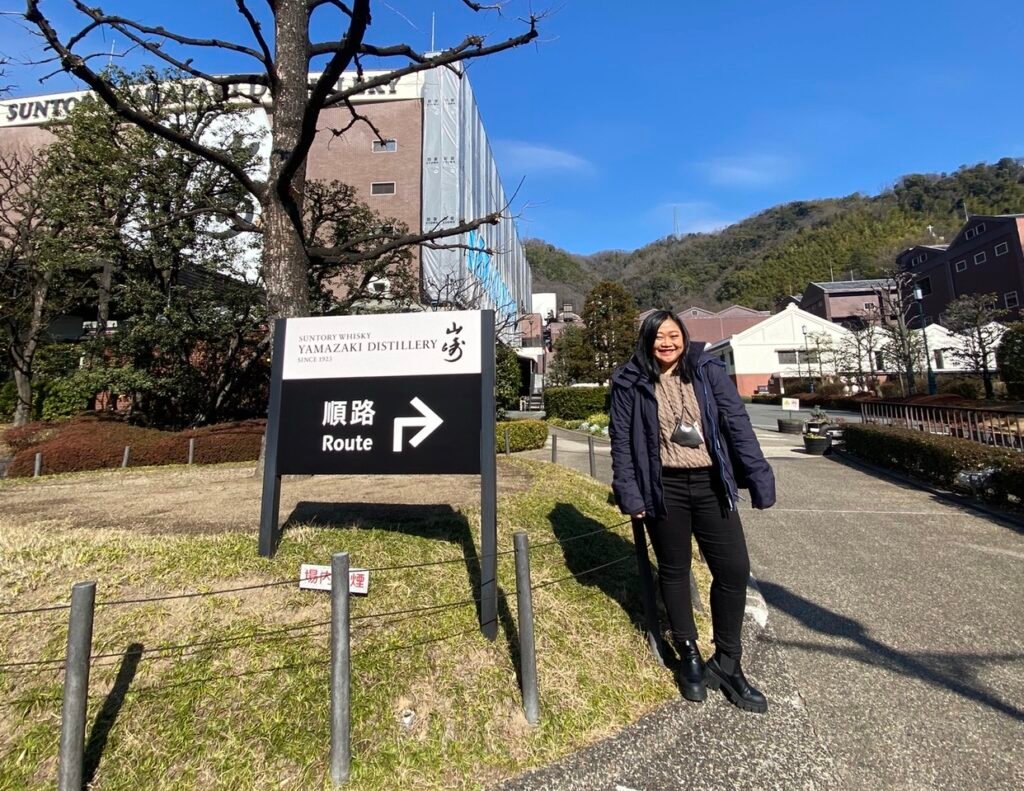
The first time I landed in Japan, I already knew one thing for sure: I had to visit Yamazaki Distillery. Not optional. Not negotiable. For whisky lovers, this place is basically Disneyland with oak barrels.
Of course, getting in wasn’t easy. You need strategy, timing, commitment — almost like trying to secure Coldplay tickets. The booking slots open exactly one month prior, and trust me, if you’re even one minute late? Gone. Somehow, luck was on my side. I secured a weekday slot at 10:20 AM.
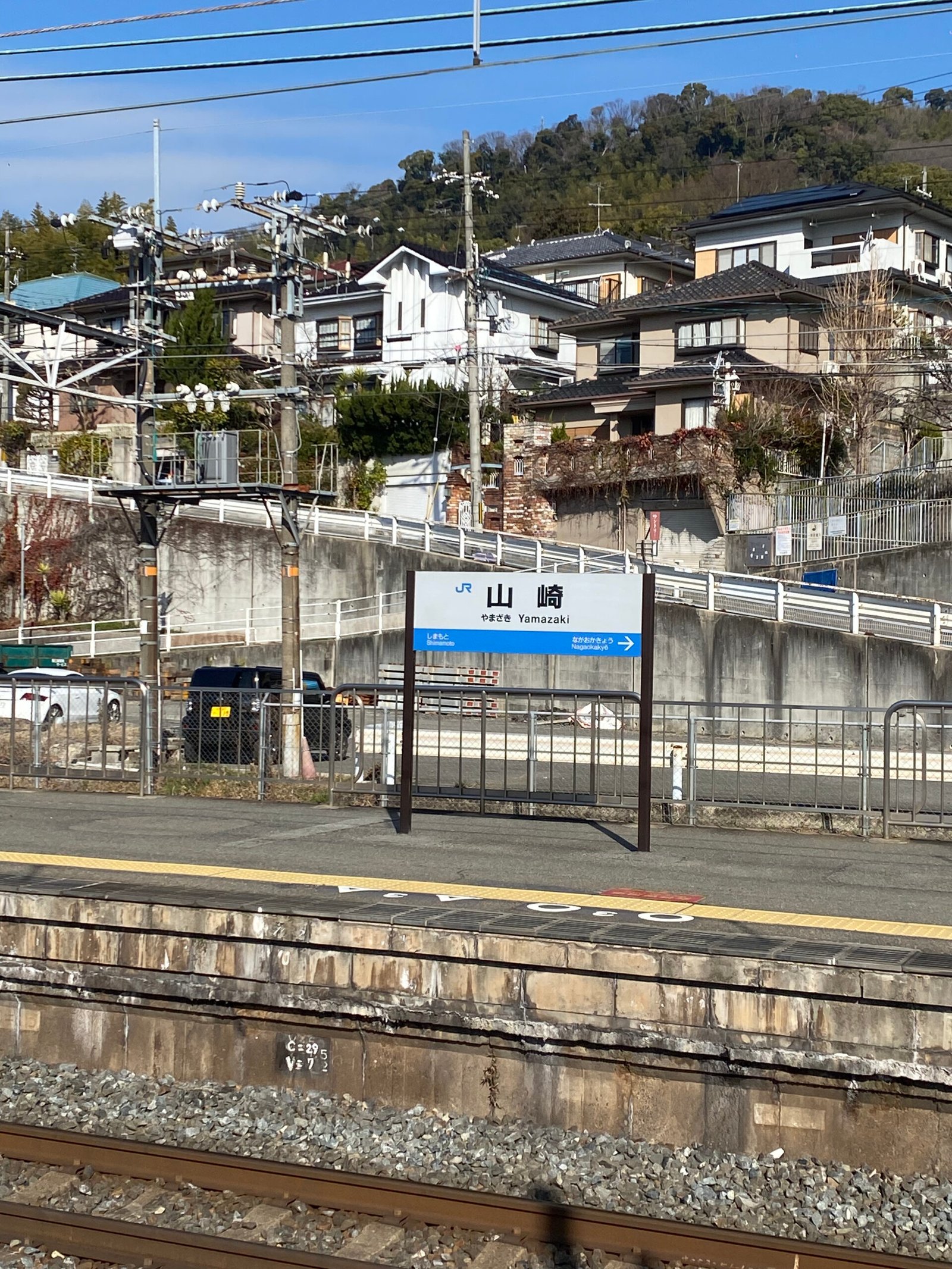
Took the local train from Kyoto to Yamazaki Station, followed by a peaceful 20-minute walk that felt very cinematic-main-character-Japan. Quiet streets, crisp air, little houses that make you suddenly want to romanticize your entire existence.
Once inside, the experience immediately felt very Japanese: efficient, organized, thoughtful. Lockers neatly lined up. Headsets handed individually for translations. Small tour groups — only about 20 people — so it never felt chaotic or touristy.
And then… 11:30 AM happened.
We entered the tasting room.
First drink: Yamazaki Highball.
Good Lord.
Crisp, delicate, dangerously easy to drink. Suddenly it made perfect sense why Japanese people can casually have whisky at lunch and still function like civilized human beings afterwards. Meanwhile I’m emotionally attached after one glass.
Then came the gift shop — which honestly deserves its own financial warning. Rare bottles, full Suntory collections, Hibiki tastings at prices significantly kinder than the outside world. It was a dangerous place for people with poor self-control and a passion for beautifully designed labels. (Me.)
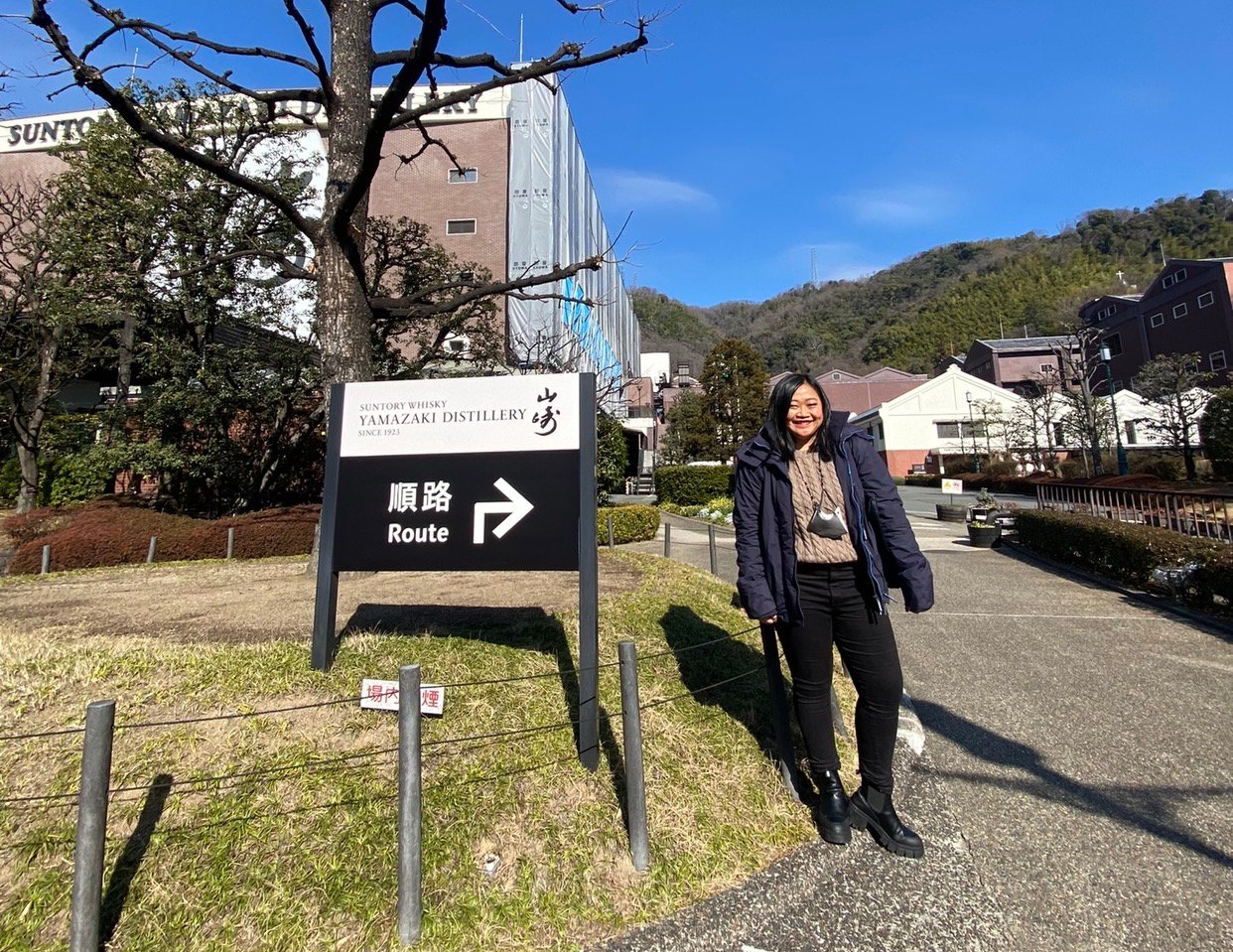
But beyond the whisky, one thing stayed with me about Yamazaki and The House of Suntory: their willingness to evolve.
Founded by Shinjiro Torii in 1899, Suntory began as a company importing wines before building Japan’s first malt whisky distillery, Yamazaki, in 1923. Nearly a century later, the brand still feels relevant globally — not because they abandoned tradition, but because they learned how to balance heritage with adaptation.
And honestly? That’s the real magic.
Some legendary brands survive because they protect tradition.
The truly great ones survive because they know when to open the door for change.
Meanwhile, many others stay stuck in nostalgia, refusing to evolve, quietly becoming bitter that the world moved on without them.
Yamazaki didn’t just teach me about whisky.
It reminded me that craftsmanship alone isn’t enough anymore.
You also need curiosity. Flexibility. Vision.
And maybe… a highball at noon helps too.