
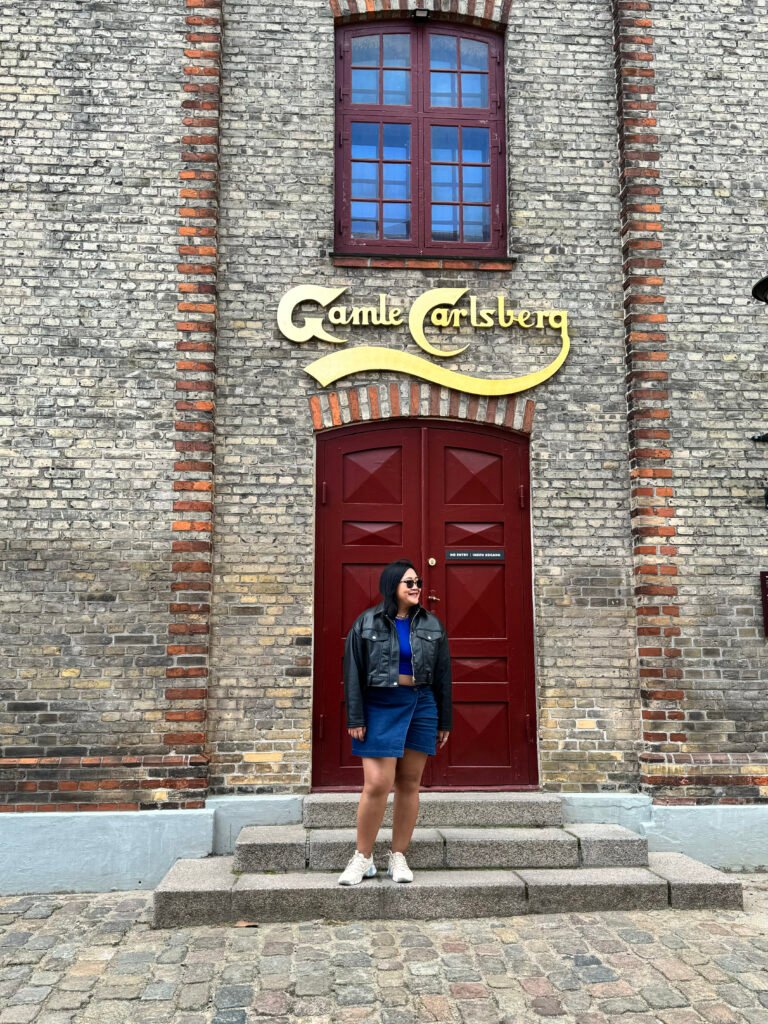
I went in expecting a tasting. I walked out having had a conversation with a 19th-century founder via hologram. Denmark does not do things halfway.
There are some places a trip simply cannot end without, and Copenhagen without the House of Carlsberg felt like a sentence left unfinished. Tucked near the palace in the original brewery buildings — the actual ones, preserved exactly as they were — this is not a brand experience dressed up as history. It is history that happens to have very good beer at the end of it.
Tickets are best booked online before you arrive. At the door, you collect your wristband — and this is where things get immediately more interesting than expected. The wristband is paper-thin, unassuming, with a small QR code printed on it. We looked at each other: a QR code on a wristband, in a brewery museum, what exactly is that for? The answer, as it turned out, was for everything.
Priced at 235 DKK per adult (approx. IDR 650,000) — includes entry, interactive museum, and one complimentary beer or soft drink
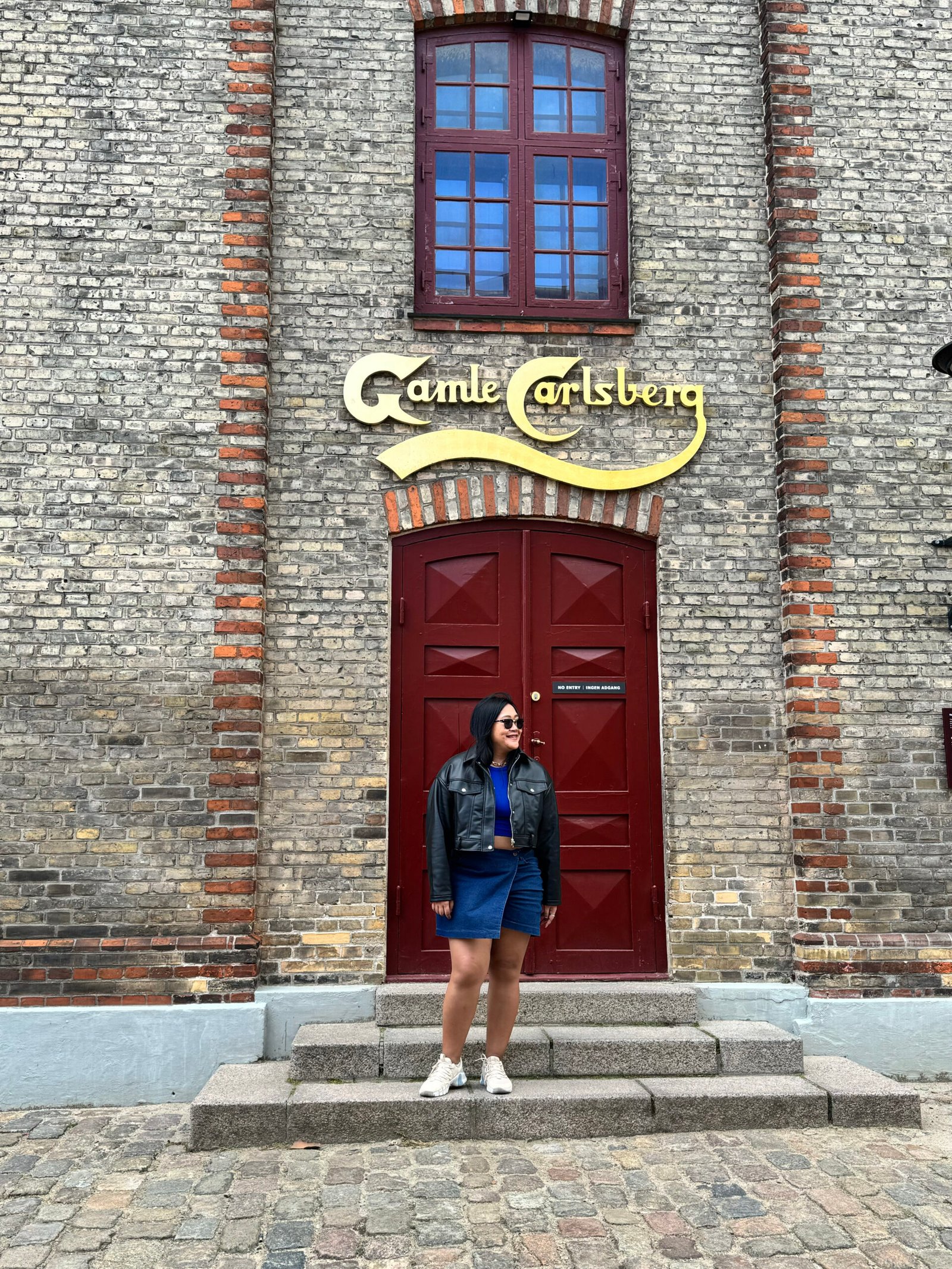
We stepped inside and were handed a welcome beer before anyone had said a word of introduction. The first instruction arrived a beat later: do not touch anything. This is an actual factory from the old days. Just follow along. We followed along.
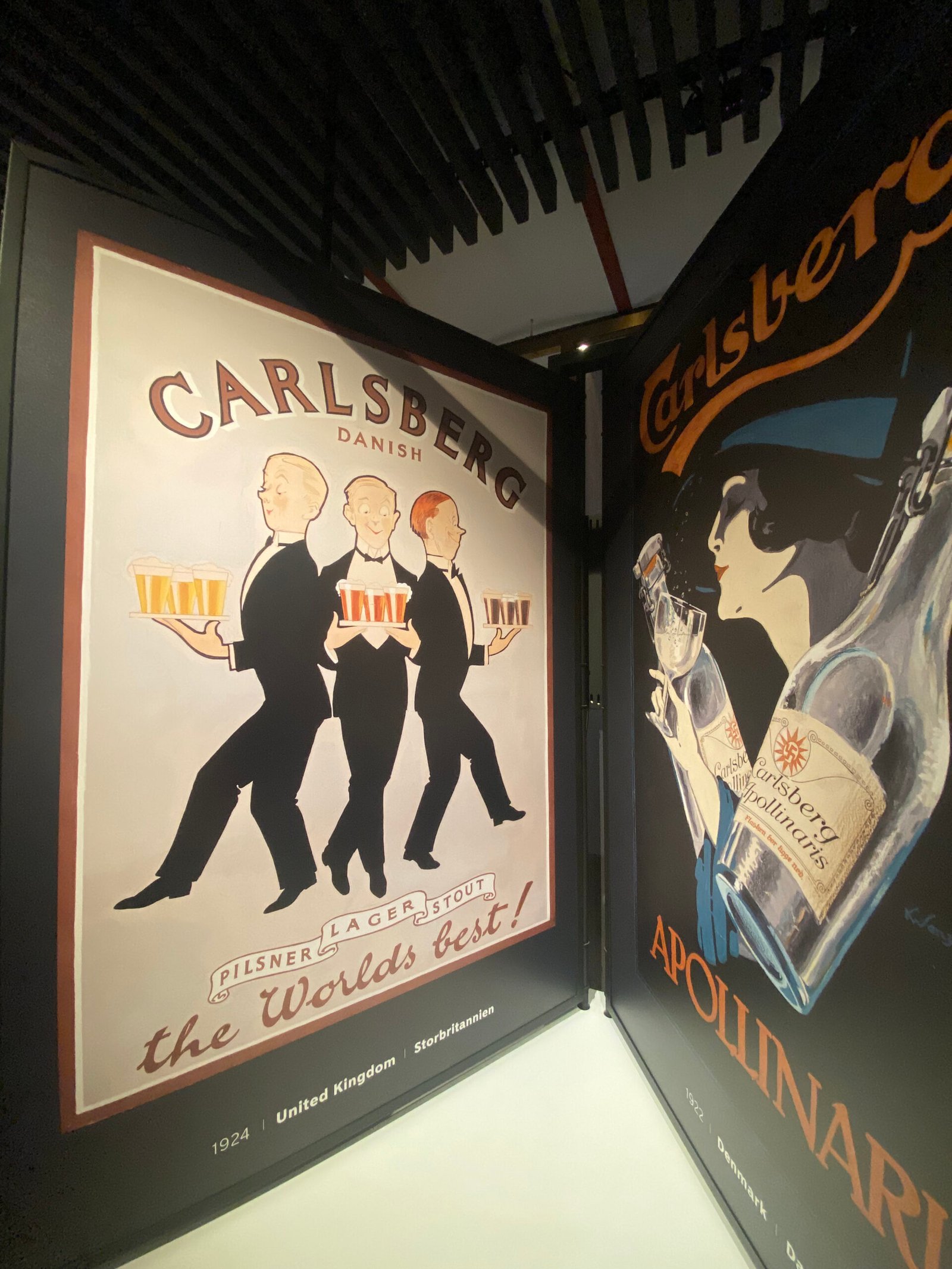
The first rooms move you through the archive — original advertisements from the day Carlsberg was founded through to the present, a hundred and fifty years of brand evolution compressed into a single wall. Watching the visual language of a beer change across centuries is quietly fascinating, the kind of thing you spend ten minutes in front of without noticing.
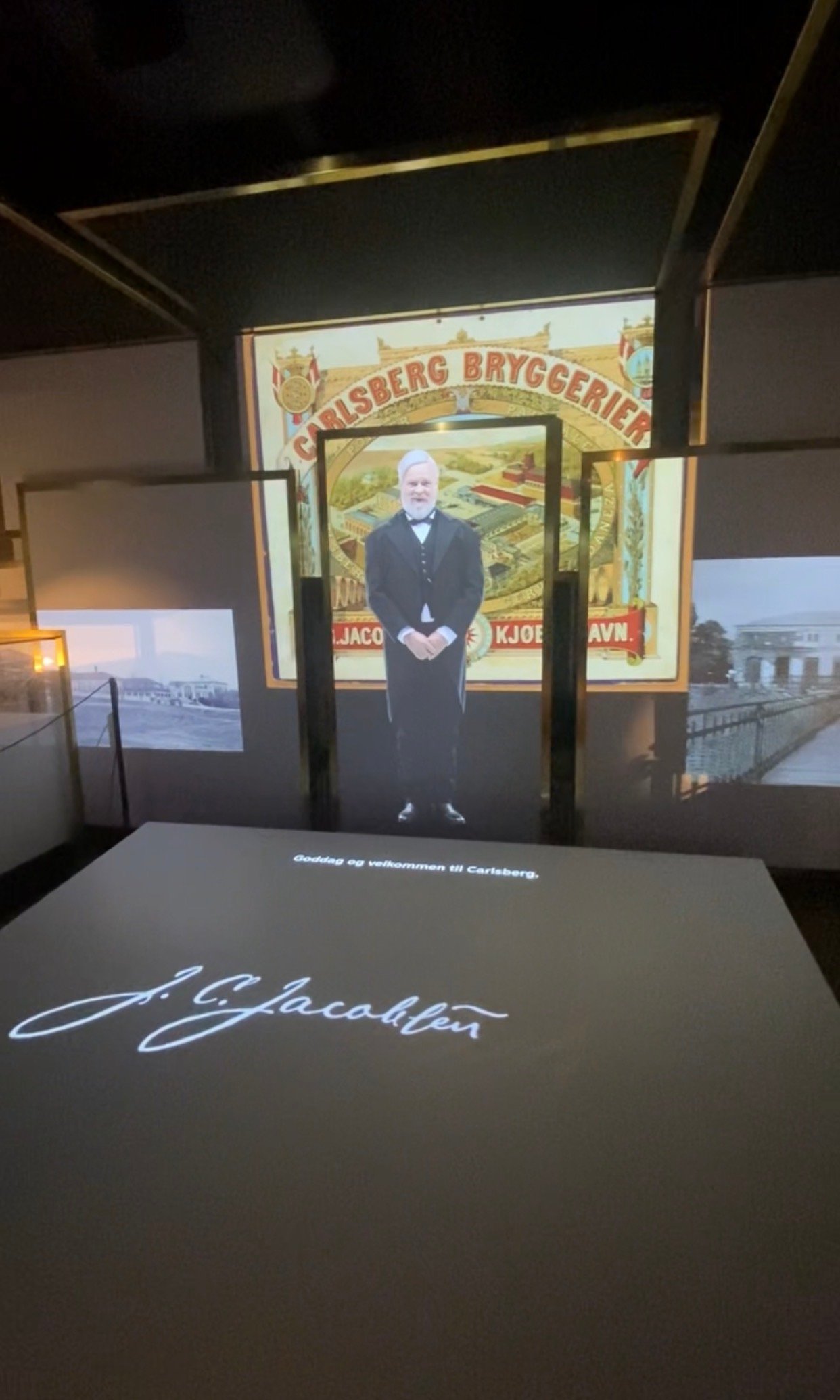
“The founder’s hologram appeared and it felt, genuinely, like he had walked into the room to address us personally.”
And then the hologram room. I want to be careful here, because “hologram” as a word has been diluted by overuse, and what I experienced at House of Carlsberg deserves better than a diluted description. The founder appeared on screen — vintage footage, but rendered with a presence that was immediate and three-dimensional — and spoke directly to the room. When the scene shifted to a confrontation between father and son, playing out across two enormous facing screens simultaneously, I understood why the instruction had been to simply follow along. There was nothing to do but watch and feel the weight of it. That moment alone is worth the ticket.
After the archive and the hologram, the museum opens into a Liverpool FC corner — Carlsberg has been the club’s official beer partner for decades, and Nia, who had been composed until this point, was not composed anymore. Lockers, hero images, the full archive of a partnership. She was happy. We moved on when she was ready.
The lab room came next, and this is where the wristband began to earn its presence. A video explains the brewing process — the hops, the fermentation, the precision of it — before the room pivots to Carlsberg’s 0.0% innovation, guided by headsets. Then, at the interactive screens, you build your own beer: choose your hops, dial your bitterness, customise the profile. The system maps your preferences against the Carlsberg archive and tells you which historical vintage you would have ordered. Tap your wristband to the screen and the result is saved to your personal QR, ready to download later. It is, somehow, both deeply nerdy and completely delightful.
“Carlsberg tastes best in Denmark. This is not brand loyalty speaking. This is terroir.”
The garden between the museum and the tasting room stopped us completely. Sixteen degrees, soft light, original brewery architecture on all sides. Copenhagen in the kind of weather that makes you understand why people live here.
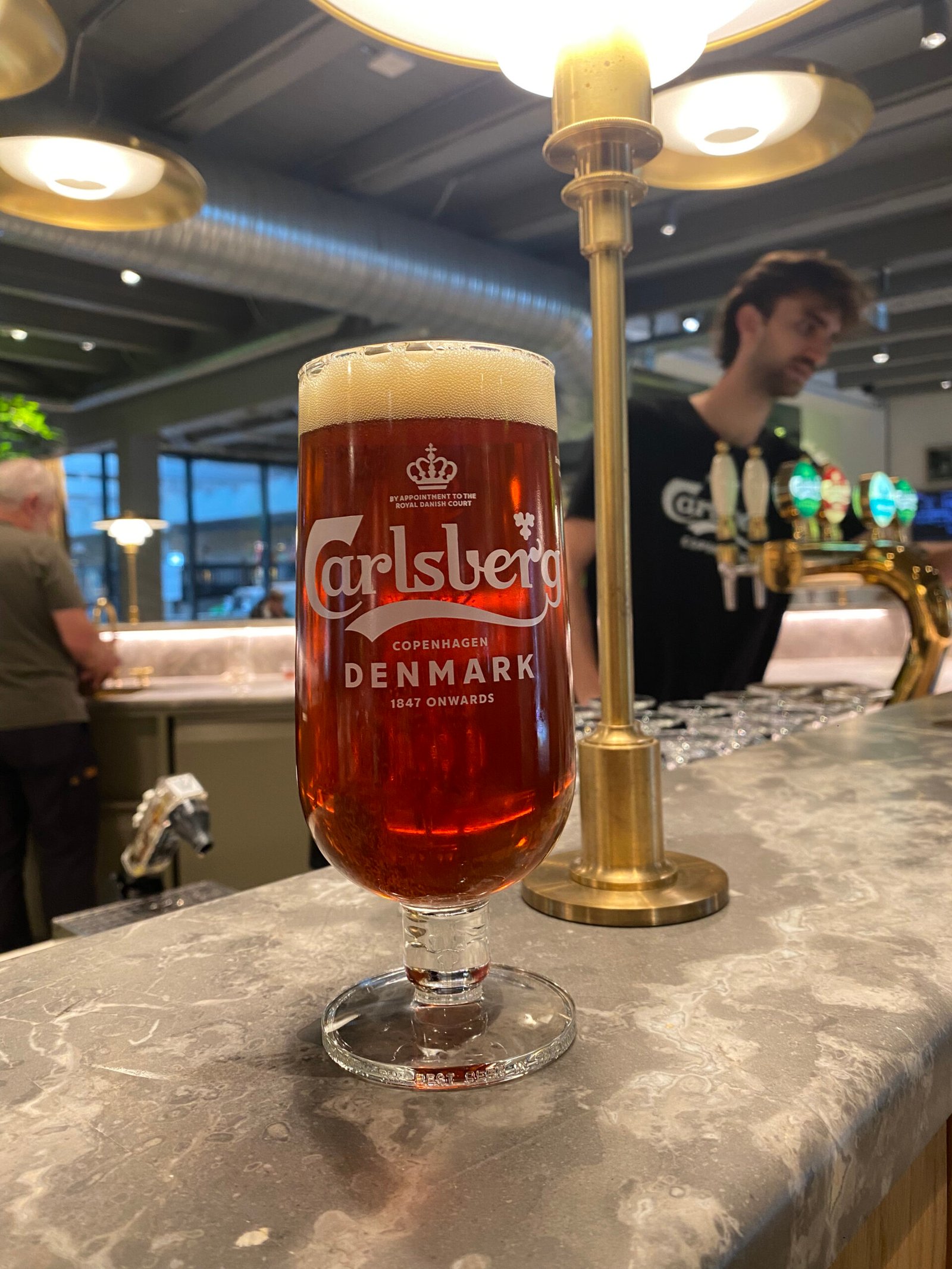
The tasting room is the finale, and it delivers. One selected beer included in your ticket, with the option to add more. We tried the O.G. Carlsberg — a version available only here, at the House of Carlsberg, nowhere else — and I will say without hesitation that it tasted different from every Carlsberg I have had anywhere else in the world. There is something about drinking a beer in the place it was born, in the building where it was first made, that changes the flavour in a way I cannot fully explain but can confidently recommend you experience yourself.
I wanted to buy every piece of merchandise in the gift shop. I bought the essentials and practised restraint. Barely.
The House of Carlsberg is the most interactive, most genuinely immersive brewery museum I have visited. It manages to be educational without being earnest, entertaining without being shallow, and — crucially — the beer at the end is actually good. If you are in Copenhagen and you drink beer, or even if you don’t, this is worth your afternoon.
P.S — the wristband QR code. I downloaded the photo at the airport. It worked perfectly. Of course it did. This is Denmark.